
Your wedding day comes and goes in a blur of vows, tears, and dancing until your feet ache, but your dress can stick around for decades if you treat it right. Whether you’re dreaming of passing it down to a daughter, niece, or future friend, or you simply want to open the box on your tenth anniversary and see it looking just as beautiful as it did on the big day, preservation is worth the effort. Here’s how to do it well!
Don’t wait too long to start the process
The biggest mistake brides make is tucking the dress into a closet “for now” and forgetting about it. Stains you can’t see yet, like champagne, sugar from cake, or even sweat, can oxidize over time and turn yellow or brown months later, even if the fabric looks spotless the day after the wedding. Aim to start the cleaning and preservation process within a few weeks of the wedding for the best results.
Choose a preservation specialist, not just any dry cleaner
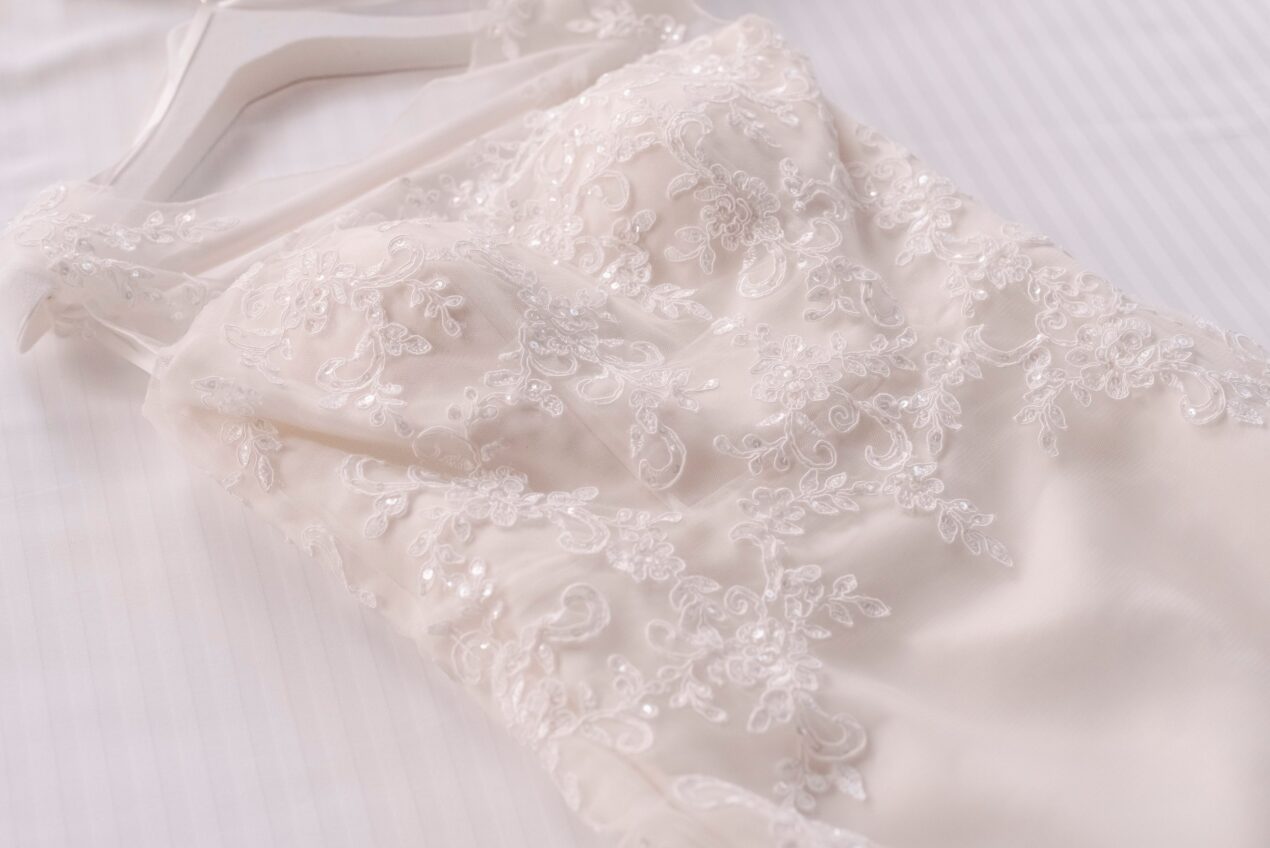
Wedding gowns are not like everyday garments. Between delicate lace, hand sewn beading, boning, and layered tulle, they need a cleaner who specializes in bridal preservation specifically. A dress like this style, with its beaded lace appliques and tulle skirt, is a good example of the kind of detailing that a generalist dry cleaner might damage without meaning to. Look for a preservation service with experience in bridal wear, ask what solvents they use, and get everything in writing before you hand over your dress!
Skip the plastic
It might seem like common sense to seal your dress in plastic to keep dust out, but plastic actually traps moisture and can cause yellowing over time. Fabric should be able to breathe. Most professional preservation services will box your dress in acid free tissue paper inside a breathable box, which is exactly what you want. If you’re storing it yourself between appointments, use a cotton garment bag rather than the plastic one it came home in.
Watch out for light, humidity, and temperature
Sunlight fades fabric and breaks down fibers, so keep your dress away from windows. Attics and basements tend to swing between extremes of heat, cold, and humidity, all of which are hard on delicate materials, so a closet in a climate controlled part of the house is a better long term home. If you live somewhere humid, consider adding a moisture absorber near the storage box.
Handle beading and embellishments with care
Beading, sequins, and embroidery add so much personality to a gown, but they’re also the most fragile parts. Over time, threads holding beads in place can loosen, especially if the dress is folded rather than boxed flat or hung properly. When you take your dress out to check on it (which is fine to do every year or so), support the weight of any heavily beaded sections instead of letting them hang from thin straps alone.
Think about what “preserved” really means to you
Preservation doesn’t have to mean the dress sits in a box forever. Plenty of brides choose to have their gown altered into a christening gown, a shorter reception dress for future events, or even framed pieces of lace as keepsakes. There’s no single right way to honor your dress. What matters is that you make an intentional choice instead of letting years pass without a plan.
Wedding dress trends come and go, but the sentimental value of your gown never really fades if you take care of it. And if you’re still in the shopping phase and haven’t found the right dress yet, our curvy bride collection is full of gowns designed to fit and flatter real bodies, so you can start your own preservation journey with a dress you’ll want to keep forever. For more tips on wedding planning and bridal fashion, check out the rest of our blog!