
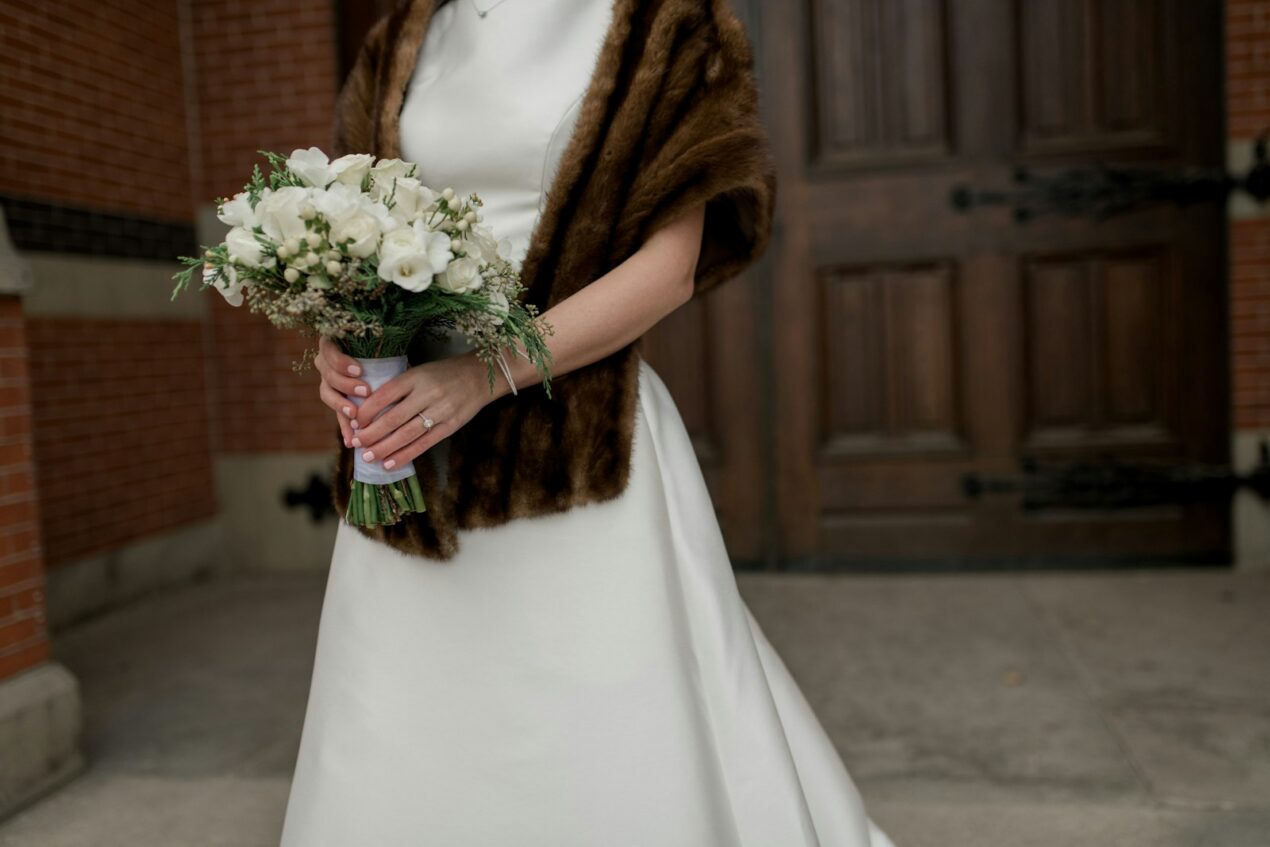
The best fabrics for a cold weather wedding gown have some actual weight to them: heavier silks like mikado and duchesse satin, velvet, structured crepe, and lace or tulle layered over a warmer lining. A single layer of lightweight chiffon or tulle looks lovely in a photo and does very little against a real chill, so the fabric question matters more in late fall and winter than in any other season.
Why Fabric Weight Matters More in Cold Weather
A gown is worn for hours, often outdoors: photos before the ceremony, a walk between venues, a reception with doors propped open for guests. Fabric that is airy and breathable in July becomes a liability in December. The goal is never to trade style for warmth. It is to choose fabrics that were already going to look beautiful and happen to hold up better in the cold.
Heavier Silks: Mikado and Duchesse Satin
Mikado is a crisp, structured silk with real body to it. It holds a shape well, which is why it shows up in cleaner, more architectural silhouettes, and that same structure gives it more insulation than a soft, flowing fabric. Duchesse satin has a similar heft with a bit more sheen, and it drapes with a fuller, more substantial feel than a lighter charmeuse or chiffon satin. Either one reads as elegant and formal, which suits a lot of winter weddings anyway.
Velvet: Not Just for Bridesmaids Anymore
Velvet has moved well past accent pieces and sashes into full gowns and bodices, and it is one of the warmest fabrics available. It photographs beautifully under the lower, warmer light of a fall or winter ceremony, and the texture itself reads as seasonal in a way that white satin does not always manage. A velvet bodice paired with a fuller skirt in a lighter fabric is a common way to get the warmth where you need it most without making the whole gown heavy.
Structured Crepe
Crepe has a slight texture and a matte finish, and it tends to be woven more densely than a fabric like chiffon. That density means it holds warmth better while still moving naturally with the body, which is part of why it has become a popular choice for simpler, modern silhouettes. It is a good middle ground for a bride who wants something warmer than tulle but does not want the formality of a heavy satin.
Layered Lace and Tulle Over a Warmer Lining
You do not have to give up a lace or tulle gown for a cold weather wedding. The fix is what is underneath it. A lace overlay or tulle skirt built over a fuller satin or crepe lining gets the romantic look of the outer fabric with real warmth underneath, instead of a single sheer layer between you and the weather. This is worth asking about specifically at a fitting: the lining fabric matters as much as the fabric everyone can see.
What To Skip When It Is Cold
A single layer of chiffon, a very lightweight tulle with no lining, or an open-weave lace with nothing behind it will all be cold in a way no amount of styling fixes. None of these fabrics are wrong choices in general. They are simply better suited to a spring or summer date, the way our guide to fabrics for a summer heat wave covers from the other direction.
Pairing Fabric With a Wrap or Jacket
Even the warmest gown fabric benefits from a layer you can add and remove: a faux fur wrap, a long-sleeved lace topper, or a tailored jacket for the walk between venues. This also gives you a second look for photos, since the jacket comes off once the reception gets warmer and the dancing starts. If you are planning an autumn ceremony specifically, our guide to a timeless fall wedding has more on layering pieces and seasonal color palettes to go with them.
Whatever the season, fit matters as much as fabric. Our curvy brides collection is built with the same structured fabrics described above, tailored to fit rather than sized up as an afterthought. Come try a few weights and textures on in person and feel the difference for yourself at FanCDesigns.com.